Where, and when, did Sir Henry Cecil begin his training career?

The late Sir Henry Cecil, who was knighted for services to horse racing in June 2011 and died two years later, aged 70, was one of the most successful horse trainers in British history. In his heyday, he was champion trainer on ten occasions between 1976 and 1993 and, in a career spanning six decades, saddled a total of 25 British Classic winners. Cecil won the Oaks nine times and the 1,000 Guineas eight times, highlighting his prowess as a trainer of fillies, but also won the Derby and the St. Leger four times apiece and the 2,000 Guineas three times. In the latter years of his career, he was best known for his handling of Frankel, who retired unbeaten in 14 races in October 2012 and was susbequently announced as the highest-rated horse in the history of World Thoughbred Rankings.
Born near Aberdeen, Scotland on January 11, 1943, Cecil gained work experience at studs in Newmarket, France and America before completing his education at the Royal Agricutural College (now the Royal Agricultural University) in Cirencester, Gloucestershire. In November 1964, he became assistant trainer to his stepfather, Sir Cecil Boyd-Rochfort, at Freemason Lodge Stables on the Bury Road in Newmarket. By that stage, Boyd-Rochfort was coming towards the end of his career, but had already become champion trainer five times, in 1937, 1938, 1954, 1955 and 1958. He retired in 1968 and the following year Cecil took out a training licence in his own right, saddling his first winner, Celestial Cloud, at Ripon in May, 1969.
 In short, Aidan O’Brien has never won the British jump trainers’ title, but it would be fair to say that is the only accolade missing from his enviable training CV. Born and raised in County Wexford, O’Brien, 55, took over the licence at the family yard in Piltown, County Kilkenny from his wife, Anne-Marie (née Crowley), in 1993 and went on to win the Irish jump trainers’ title five years running between 1993/94 and 1997/98. On the opposite side of the Irish Sea, he became best known for his handling of Istabraq, owned by J.P. McManus, who won the Champion Hurdle at the Cheltenham Festival three years running, in 1998, 1999 and 2000.
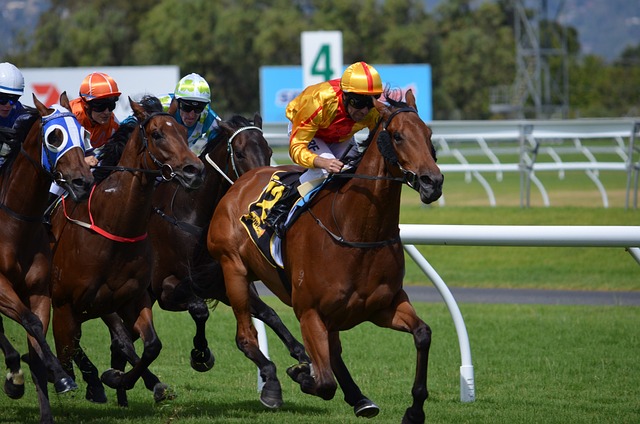 The term ‘Thoroughbred’, written with an initial capital letter, refers to a breed of horses, to which all racehorses belong. Of course, the term ‘throughbred’ is used to describe to any pureblooded horse, of unmixed ancestry or descent, but, strictly speaking, refers exclusively to the Thoroughbred breed.
 The first Grade 1 steeplechase of the British National Hunt season is the Lancashire Chase, better known, for sponsorship purposes, as the Betfair Chase, which is run at Haydock Park in November. In fact, at the time of writing, the next renewal is scheduled for November 23, 2024, making the race the first Grade 1 contest, of any description, on the 2024/25 National Hunt calendar.