How much do racehorses weigh?
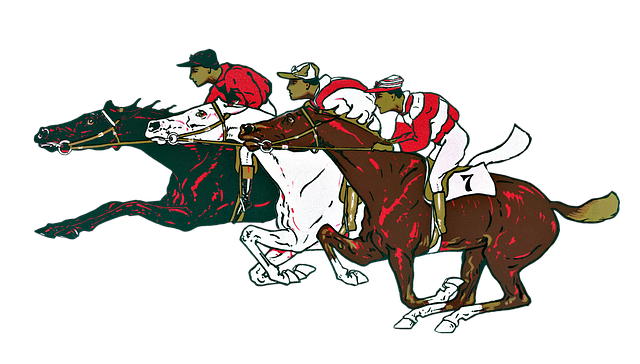 All racehorses belong to the Throughbred breed and are descendants of one of the three foundation sires, the Darley Arabian, Byerley Turk, and Godolphin Arabian, which were imported to England and crossed with native European mares. In terms of confirmation, or physical attributes, Thoroughbred racehorses are characterised by lean bodies, broad chests, short, curved backs.and long legs. The weight of a Thoroughbred racehorse depends, to varying degrees, on its pedigree, age, gender, height and the discipline for which it is trained.
Traditionally, racehorses destined to compete in National Hunt racing were bred specifically for the purpose and, as such, were stronger, skeletally, and more robust, generally, than their Flat racing counterparts. Even with the modern emphasis on speed, this is still true, albeit to a less extent. In any case, the demands of National Hunt racing, in terms of stamina and jumping ability, dctate that most racehorses do not reach their peak until they are between seven and ten years old. Thus, while it is dangerous to generalise, hurdlers and steeplechasers do typically appear larger and sturdier than younger Flat horses.
Even on the Flat, some Thoroughbreds are naturally suited to running shorter, sprint distances, while others are better suited to running longer, staying distances. Sprinters typically have bulky muscles, a vertically deep girth and slightly shorter legs, conducive to a faster stride rate. Stayers, by contrast, have long, thin muscles, a shallow girth and a leggy appearance. Thus, while a mature Thoroughbred racehorse typically weighs between 900lb and 1,200lb, on average, there may always be lighter or heavier horses in training.
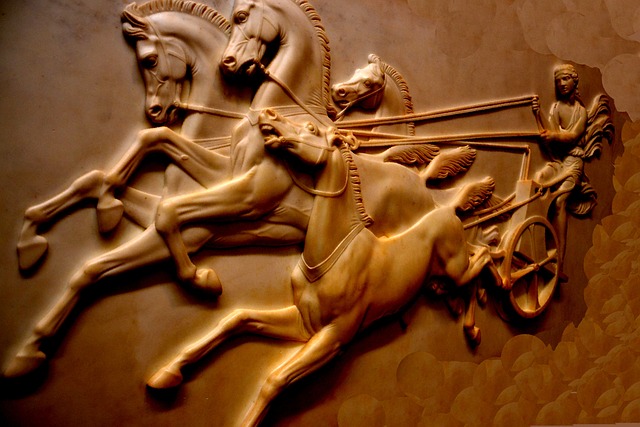 Horse racing is a truly ancient sport, which has been in existence, in one form or another, since horses were domesticated approximately 6,000 years ago. As such, its beginnings are lost in antiquity, although the Jockey Club cites Central Asia, c.4500 BCE, as a likely starting point.
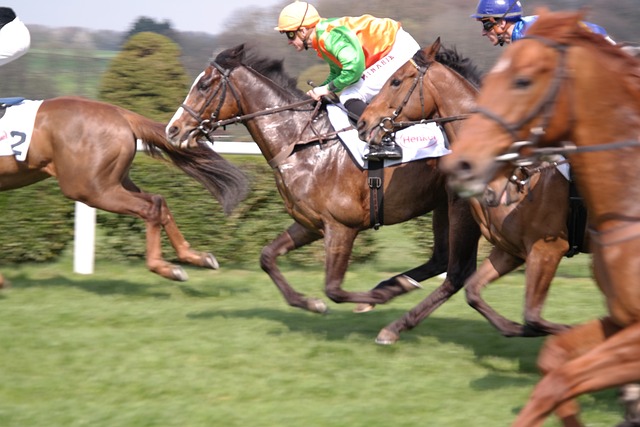 More often that not, in horse racing, the question of how high a horse can jump is more important than how far it can jump. That said, certain obstacles, such as the Water Jump on the Grand National Course at Aintree, require horses to cover over three times more ground horizontally than vertically. According to the Fédération Equestre Internationale, the world record for long jump over water is 27′ 7″, set by Something, ridden by Andre Ferreira, in Johannesburg, South Africa on 25 April 1975. Thus, the 8′ 10″ wide expanse of water at Aintree is rarely problematic for seasoned steeplechasers.
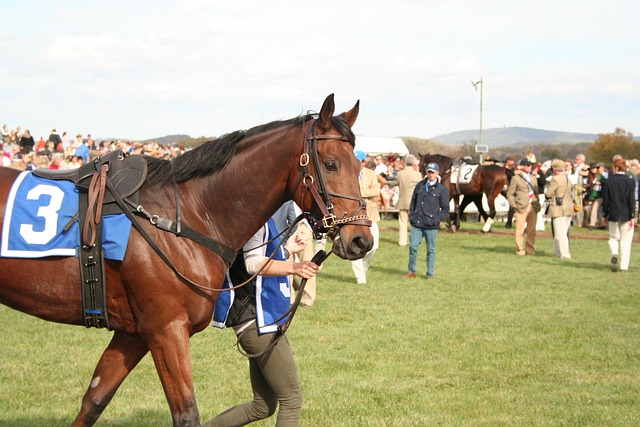 Horses are prey animals and, as such, are naturally flighty. In other words, in the absence of other defences, they have fast reaction times and are predisposed to run away from danger – which, in the wild, includes natural predators, such as bears, mountain lions and wolves – as their primary means of survival.