What’s Tic-Tac and Happened to the Tic-Tac Man?
 No, not those refreshing little sweets in a plastic container with a flip-top lid. If you love horse racing and of a certain age you may remember seeing someone at the racecourse, standing on a box to hold an elevated position, wearing white gloves, hands moving with a flurry of activity. The actions were purposeful, intent on getting a message across, with haste, and the only people watching were the bookmakers (turf accountants) who quickly chalked up the betting odds for the next race.
Tic-tac is a traditional form of non-verbal communication used by bookmakers and gamblers at the horse racing track to convey betting odds, betting movements, without speaking. Tic-tac details information by using hand signals or gestures in a systematic way. For example, the signal of touching your ear represents the betting odds 6/4 (ear’ole,). Many will remember watching and listening to eccentric horse racing pundit and celebrity John McCririck, who sadly passed away in 2019 and was a fan of tic-tac.
Tic-tac is a non verbal communication used to not only detail the odds for a given horse but how much money a bookmaker was willing to take on the horse. In essence, tic-tac was used as a secret language to communicate information at the racecourse so there was little disparity between bookmakers betting odds. This stopped punters from exploiting any difference in prices.
Other simple examples of tic-tac include:
-
Odds of 9/4 (top of the head) both hands touching the top of the head
-
Odds of 2/1 (bottle) right hand touches the nose
-
Odds of 5/4 (wrist) the right hand is moved to touch the left wrist
-
Odds of 33/1 (double carpet) both arms crossed with hands flat against the chest
In a newspaper article in 1937 Charles Adamson, a retired bookmaker, said he and his brother, Jack, invented the tic-tac system and used it as far back as 1888. It was a common sight at race tracks in the 20th century but declined with the advent of mobile technology. In fact, in 1999 there were said to be just three practitioners working including Micky ‘Hokey’ Stuart.
There are no tic-tac practitioners left in this modern era of on-course bookmaking.
Tic-tac helped form the betting market. With the advent of betting exchanges, the forming of the market was eclipsed making not only tic-tac practitioners but odds compilers redundant. The betting exchanges formed their own market and these were used by bookmakers.
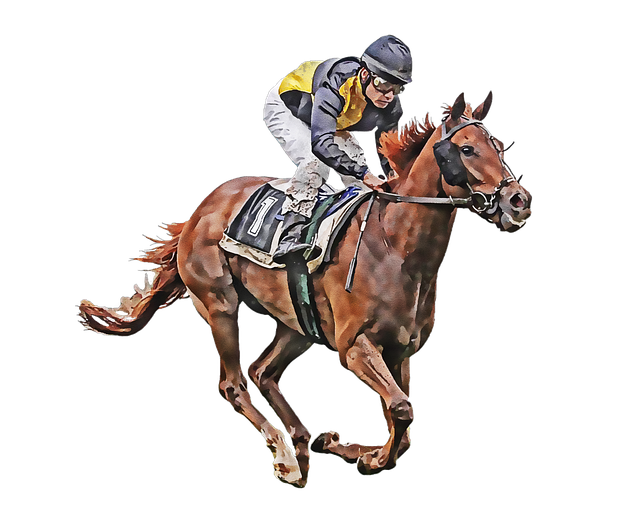 During the truly cold British winter of 1984/85, which was characterised by heavy snowfall nationwide and an average temperature of just 2.7°C, or 37°F, horse racing suffered a spate of abandonments, which, in turn, provided the catalyst for the introduction of all-weather racing. However, it was not until December, 1988, that the Jockey Club – which, at the time, still regulated the sport of horse racing in Britain – granted permission for Lingfield Park in Surrey, South East England, to construct a synthetic Equitrack course inside its existing turf course.
 As far as National Hunt ratings are concerned, the Timeform era did not begin until the early sixties. By contrast, the King George VI Chase was inaugurated in 1937, so the earlier winners, notably Cottage Rake (1948), who also won the Cheltenham Gold Cup in 1948, 1949 and 1950, were never awarded a Timeform rating. Also missing from the Timeform top ten is Wayward Lad who, in 1985, created history by becoming the first horse to win the King George Chase three times, but only ever achieved a Timeform Annual Rating of 175; he falls into the ‘top class’ category, according to the respected ratings organisation, but is still 9lb shy of the 184 required to feature in the ‘all-time’ top ten.
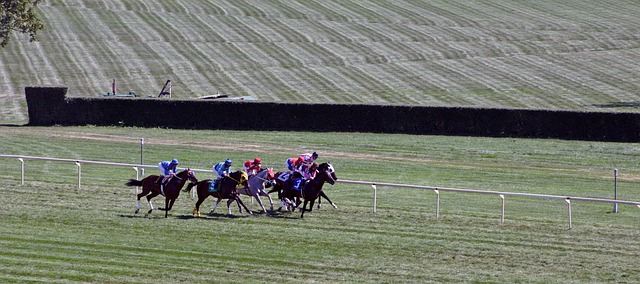 The Welsh Grand National is run over three miles and six-and-a-half furlongs, and twenty-three regulation park fences, at Chepstow on the day after Boxing Day. The distance of the race is half a mile shorter than that of the Grand National, which, despite being shortened in recent years, still stands at four miles and two-and-a-half furlongs. The fences, too, are fewer in number, and lesser in difficulty, than the 30 distinctive, spruce-topped obstacles that must be completed in the Grand National.